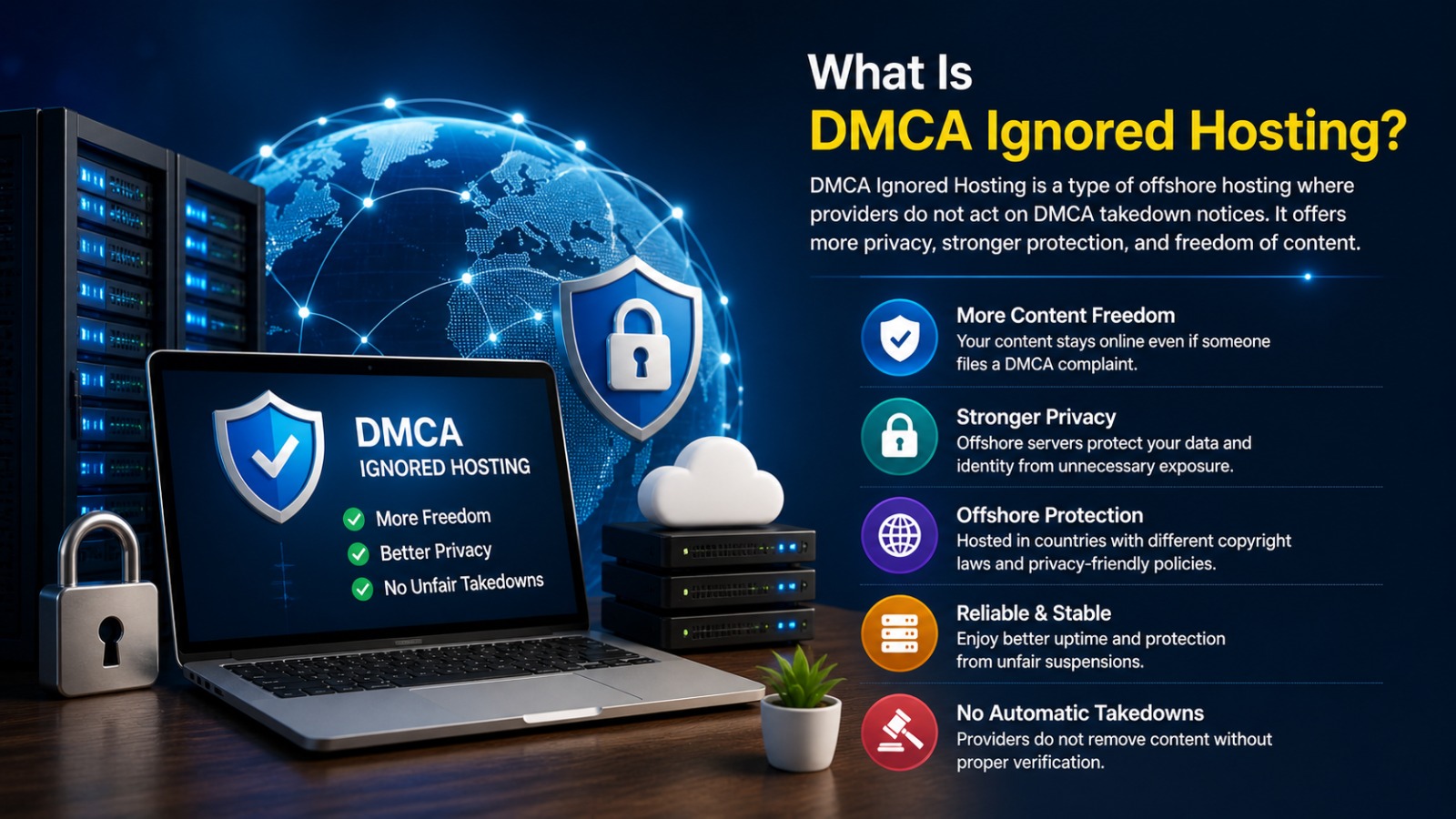
In the online world, digital content moves fast, and so do copyright complaints. As creators, marketers, or business owners, anyone who publishes content on the internet is aware of the risk of receiving a DMCA notice. This is exactly why many users search for more privacy-focused hosting solutions that give them extra freedom and protection. One term that repeatedly appears in these discussions is DMCA ignored hosting, a type of offshore hosting where providers do not act strictly on traditional copyright complaints.
Many people who hear about it for the first time are confused. Some think it’s illegal, others believe it’s meant only for controversial websites. But the truth is far more practical. DMCA ignored hosting simply represents a type of web hosting that provides higher tolerance for takedown notices, more data protection, and a greater degree of privacy than standard hosting companies.
To understand it clearly, we must first understand what the DMCA is and why it matters.
Understanding the Basics: What the DMCA Really Is
Before diving into DMCA ignored hosting, it’s important to understand what the Digital Millennium Copyright Act (DMCA) means. In simple words, the DMCA is a US-based copyright law created to protect the rights of content owners. Under this law, if someone believes their image, video, text, or other digital content has been used without permission, they can file a DMCA complaint against the website owner or the hosting provider.
Traditional hosting companies in the US and many other countries are legally required to respond quickly to DMCA notices. They usually warn the website owner, remove the content, or even suspend the entire website. This strict approach helps protect copyright owners, but it also causes problems for legitimate website owners when complaints are filed unfairly or abusively.
This strict enforcement created a demand for hosting providers located in regions where DMCA rules either do not apply or are not treated with the same level of urgency, and this is where DMCA ignored hosting comes into the picture.
What Is DMCA Ignored Hosting?
DMCA ignored hosting refers to web hosting services that do not immediately act upon DMCA takedown requests. These hosting companies operate in countries where copyright laws are different from those in the US. Since they are not bound by DMCA rules, they do not automatically remove content based on a complaint alone.
It is important to note that DMCA ignored hosting is not the same as “illegal hosting.” It simply provides more relaxed enforcement and higher protection for user content, especially in cases where DMCA notices are misused.
People use this type of hosting when they want to reduce the risk of sudden website takedowns, avoid unnecessary interruptions, protect their data, or safeguard their business from abusive copyright claims.
How Offshore Hosting Fits Into DMCA Ignored Hosting
DMCA ignored hosting is usually offered in offshore locations, countries with privacy-friendly laws, strict data protection policies, or different approaches to copyright enforcement. These regions focus more on user rights and data freedom rather than following international copyright complaints.
Offshore hosting provides three major advantages:
1. Less strict copyright enforcement than US-based hosting.
2. Higher privacy because many of these countries do not require storing user data or complying with foreign requests.
3. More stability, since your website is less likely to be suspended unfairly.
Many online businesses choose offshore locations not to avoid responsibility, but to protect themselves from false claims, competitive attacks, or automatic takedowns that could harm their digital presence.
Different Types of DMCA Ignored Hosting
Even though the concept seems simple, DMCA ignored hosting comes in multiple forms based on the needs of users.
1. Shared Hosting:
This is the most affordable option, where multiple websites share the same server. It’s suitable for beginners or small sites that need basic protection from DMCA notices.
2. VPS Hosting:
A VPS offers dedicated resources, higher performance, and better security. It suits growing websites that need more control and more resistance to sudden takedowns.
3. Dedicated Servers:
These provide complete control over a server with the highest level of privacy and DMCA protection. Large platforms, streaming websites, and businesses handling high traffic often prefer dedicated DMCA ignored servers.
4. Bulletproof Hosting:
This is the most extreme form, offering maximum tolerance for complaints. However, it’s often associated with risky usage, and responsible businesses rarely need this level of protection.
Each type serves a different purpose, but the core idea remains the same: provide extra freedom and safety compared to traditional hosting providers.
The Pros and Cons of DMCA Ignored Hosting
Like any other hosting option, DMCA ignored hosting comes with its benefits and drawbacks.
One of the biggest advantages is content stability. Your website won’t be taken down instantly just because someone filed a complaint, especially in situations where the claim is false or malicious. Many creators and publishers complain that even legitimate content sometimes receives DMCA strikes, which disrupts their business. With DMCA ignored hosting, they get more time, more privacy, and fewer unnecessary interruptions.
Another major benefit is stronger anonymity. Offshore providers typically do not share user data, making it ideal for people who want to avoid tracking, protect their identity, or run projects that require discretion.
Higher freedom of speech, protection from unfair competition, and the ability to publish content without fear of immediate takedowns are other reasons why people choose this hosting method.
However, there are also disadvantages. Since these servers are located in foreign regions, sometimes the performance may vary depending on the location of your audience. Customer support quality may differ, and some providers may not follow the same strict security standards as US-based hosting companies. Additionally, even though DMCA ignored hosting provides more privacy, it does not give permission to violate copyright laws. Users must still be responsible and follow ethical publishing practices.
Legal Considerations You Should Understand
A common misunderstanding is that DMCA ignored hosting allows people to publish copyrighted content without consequences. This is not true. While DMCA ignored hosting reduces the likelihood of immediate takedowns, it does not protect users from legal action if they knowingly upload illegal or copyrighted material.
Each country has its own laws, and responsible hosting providers still follow local regulations. The main difference is that they are not forced to respond to international DMCA requests unless required by their local legal system.
For most genuine website owners, this type of hosting is perfectly safe and legal as long as their content respects the laws of the hosting country.
Best Use Cases for DMCA Ignored Hosting
DMCA ignored hosting is widely used in many legitimate situations. Bloggers, publishers, media websites, and review platforms often face unfair DMCA complaints, especially when they express opinions or expose wrongdoing. Hosting such content offshore helps protect them from being silenced.
Streaming websites, file-hosting platforms, adult content creators, cryptocurrency projects, and investigative journalism websites also rely on offshore hosting because they need extra privacy and stability.
Businesses operating in industries where competition is high often use DMCA ignored hosting to protect themselves against fake copyright takedown requests from rivals.
This hosting method is also popular among people who want to secure their personal data and avoid monitoring from institutions or third parties.
How to Choose the Right DMCA Ignored Hosting Provider
Selecting a reliable provider is more important than the hosting type itself. The right company should offer strong servers, stable uptime, good customer support, and clear privacy policies. It is always better to choose a provider that has been active for years and has a positive reputation in the hosting community.
You should also check whether the provider stores logs, how they respond to legal complaints, and what security measures they use to protect your data. A good DMCA ignored host should clearly state what level of protection they offer and what content they allow.
Always avoid providers who promote illegal activities, as they usually lack long-term stability.
Final Thought
DMCA ignored hosting is not about hiding illegal content, it’s about protecting legitimate creators, businesses, and publishers from unfair takedown requests and unwanted interference. In an online environment where copyright complaints are often misused, this hosting method provides extra stability, privacy, and freedom of expression.
By understanding what DMCA ignored hosting really is, how it works, and how to choose a reliable provider, website owners can make smarter decisions and operate without fear of sudden disruptions. It is a practical solution for anyone who values freedom, privacy, and control over their digital presence.
-

-

How to Choose a Website Designer: A Complete Guide for Businesses
-

Maximize Your Dental Practice's Social Media Reach: Best Time to Post for Increased Engagement
-

AI Tools for Dental Marketing: Transforming Your Dental Practice with Smart Automation
-

How to Rank Your Dental Clinic in Google Map Pack: Proven Local SEO Tips for Success

Get started today with a free marketing audit
Contact Information
-
332 S Michigan Avenue, Chicago, IL 60604